Sinopse resumida
Nomeado para 10 Óscares.
Não parece que tenha merecimento para tanto.
***
Na visita feita ao Centro de Arte Moderna da Gulbenkian, vd. aqui, aberta anteontem para o público, depois de quatro anos em que foi encerrado por motivos de ampliação, a nossa apreciação ficou muito aquém das expectativas:
Fica-se por saber que razões impedem a concretização do projecto - muito publicitado com imagens de ante visão dos resultados previstos - de ligação, por viaduto pedonal, do Espaço Gulbenkian ao, agora muito mal cuidado, ajardinamento do outro lado da Avenida Gulbenkian, e deste, também por viaduto pedonal, ao espaço em frente, que já foi parque de estacionamento, e agora é nada, assim como o terreno anexo onde existiu o restaurante Gôndola e uma vivenda, destruída, propriedade da Câmara Municipal.
Desde 2023 que a Temporada Engawa tem vindo a apresentar aos lisboetas um conjunto de artistas e pensadores do Japão e da diáspora japonesa, reunindo diversas colaborações com artistas e instituições culturais. Este programa investiga o modo como uma nova geração de artistas japoneses, num contexto de pressão social e psicológica, abraça uma diversidade de linguagens interligadas e considera o lugar da inteligência emocional como possibilidade de partilha para habitar o complexo mundo atual.
As obras que se apresentam no culminar desta temporada no CAM articulam-se e dialogam com o projeto do novo edifício, concebido pelo arquiteto japonês Kengo Kuma, e com a ampliação do Jardim Gulbenkian. O título da temporada toma o nome de Engawa, que se manifesta no CAM sob a forma de uma magnífica pala inspirada nas casas tradicionais japonesas, o símbolo deste projeto arquitetónico, e que é visto como um espaço de transição para encontros e transformação.
Engawa pode ser tomado como uma metáfora para um «espaço liminar», uma ideia amplificada na década de 1980 no Japão e no mundo ocidental através do conceito de 間 [ma]. Esta noção de «espaço liminar» ou de transição materializou a possibilidade de um diálogo comum, refletida nos movimentos artísticos multidisciplinares do Japão a partir do pós-guerra, um período em que emergiu uma multiplicidade de histórias paralelas que questionavam a ficção da história oficial que construía a identidade japonesa.
Este capítulo da temporada desenvolve estes temas através de um programa de exposições de arte temporal, projetos site-specific e obras encomendadas a artistas a meio de carreira, cujo trabalho é apresentado pela primeira vez em Portugal. As suas práticas levantam questões fundamentais sobre a nossa coexistência com os mais variados tipos de entidades na presente era de transformações tecnológicas, sociais e políticas, proporcionando perspetivas sobre questões que nos afetam a todos relacionadas com os problemas sociais, históricos e ecológicos que o mundo enfrenta na atualidade.
Num profundo processo colaborativo com o contexto intercultural de Lisboa e Portugal, o programa tem como objetivo refletir sobre o modo como as inter-relações entre perceção e emoção criam outras realidades. Também se relaciona com as principais exposições inaugurais do CAM e outros eventos de artes performativas, abrindo novas vias para a compreensão das ligações entre o Japão e o resto do mundo. No seu conjunto, estas ligações produzem uma circularidade prolífica, entrelaçando significados e narrativas, com destaque para as relações entre Portugal, o Japão e o Brasil.
Em 2023, apresentámos obras do coletivo artístico 目[mé], e dos artistas Ryoji Ikeda e Lei Saito na Fundação Gulbenkian e noutros espaços da cidade. A temporada incluiu um programa de homenagem à participação japonesa no movimento Fluxus internacional, em particular a Mieko Shiomi, importante compositora japonesa deste movimento, bem como uma intervenção no bairro lisboeta de Marvila pelo coletivo Chim↑Pom from Smappa!Group (CPfSG), em parceria com o Alkantara Festival 2023.
Curadoria de Emmanuelle de Montgazon, com Rita Fabiana."
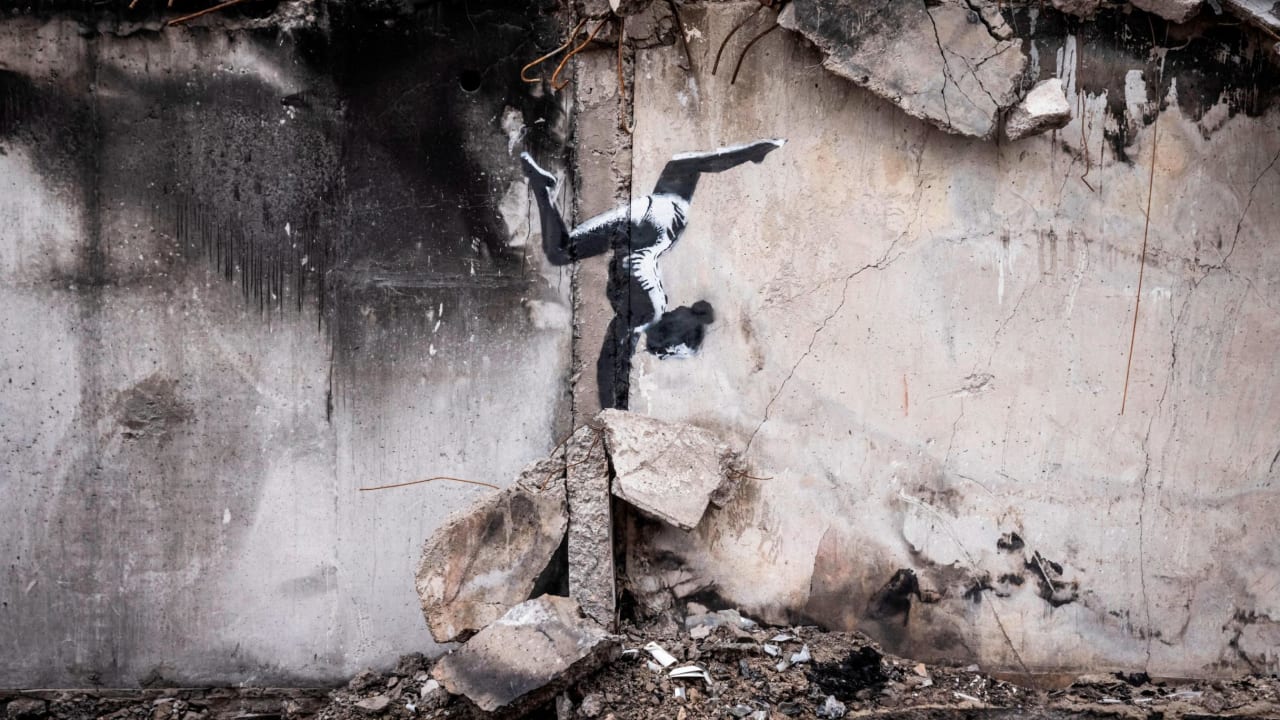
Banksy artwork appears on west London building


Correl . Chinês, ou paga ou prisa , Junho 2011 - Ai Weiwei no Hishhorn - Janeiro 2013 - Ai Weiwei volta ao Hishhorn - Agosto 2017 - A China e o resto do mundo, segundo Ai Weiwei - Setembro 2020 - “Bem-vindos ao meu país, Portugal”: Ai Weiwei inaugura a sua grande exposição em Lisboa - Junho 2021


On Wednesday, Pablo Picasso's "Woman with a Watch," fetched $139.3 million, the second-highest price ever achieved for the artist. "Femme a la montre," the 1932 painting depicting one of the Spanish artist's companions and muses, French painter Marie-Therese Walter, had been valued at over $120 million before going on the block at Sotheby's.


.jpg)
.jpg)
.JPG)


Ponte dos Espiões, era esta, na estrada que liga Berlim a Potsdam. Na Conferência de Potsdam decidiram os aliados a forma de administrar a Alemanha e a divisão de Berlim entre eles.
.jpg)


Arquitectura moderna em Berlim


Berlim, Rathaus

Quem quiser ter uma ideia do que era o altar de Pérgamo no seu sítio original, pode ver uma encenação a uma distância próxima: Pergamonmuseum. Das Panorama
more: here

Curiosidade: O primeiro semáforo europeu foi colocado em Berlim em 1924. Ainda lá está.

"A orfandade das obras digitais" é o título de um artigo da autoria do habitual colunista no Público Francisco Teixeira da Mota.
É suficientemente elucidativo da questão que, com muita propriedade, o conhecido advogado de causas polémicas abordou o tema do ponto de vista que suscita o interesse de um jurista.
Procurei na net informação mais detalhada sobre o tema, encontrei um artigo no NYT de que transcrevo endereço e as linhas iniciais para abrir o apetite por coisas destas.

“I won, and I didn’t break any rules,” the artwork’s creator says.
This year, the Colorado State Fair’s annual art competition gave out prizes in all the usual categories: painting, quilting, sculpture.
But one entrant, Jason M. Allen of Pueblo West, Colo., didn’t make his entry with a brush or a lump of clay. He created it with Midjourney, an artificial intelligence program that turns lines of text into hyper-realistic graphics.
Mr. Allen’s work, “Théâtre D’opéra Spatial,” took home the blue ribbon in the fair’s contest for emerging digital artists — making it one of the first A.I.-generated pieces to win such a prize, and setting off a fierce backlash from artists who accused him of, essentially, cheating.
Desconhecia as razões desta petição pública, aliás, desconhecia mesmo a existência destas obras de arte (más ou boas, são obras de arte, até prova em contrário), até ler um artigo de Rui Moreira no Público, a propósito da polémica levantada com a remoção ou não remoção da escultura - Amores de Camilo - no Largo Amores de Perdição, em frente da antiga Cadeia da Relação.
Escreve Rui Moreira no Público - Uma polémica “à Porto” - ---"As câmaras recebem muitas propostas e ofertas e são livres de não as acolher. Veja-se como Moedas foi chacinado ao aceitar a oferta a Lisboa das estátuas dos médicos. Compreendo que haja quem discorde e se mobilize. É legítimo, desde que não se recorra a leituras intolerantes." Não refere Rui Moreira a escultura colocada na Praça do Município - "Pareidolie" - . Porquê?


%20D(am)%201990.jpg)
--- correl. - NATUREZA VIVA


Terça-feira - O Presidente da Câmara Municipal do Porto ordena a remoção da Estátua de Francisco Simões - Amores de Camilo - a instâncias de abaixo-assinado de 37 ilustres. O presidente Moreira também concordava que a obra era feia e que, por essa razão, devia ser removida.
Quarta-feira - Rui Moreira reverte decisão de remoção da estátua de Camilo.

Já agora, que está com a mão na massa, por que não manda o Presidente Moreira remover o Monumento aos Heróis da Guerra Peninsular, na Rotunda da Boavista, que coloca no cimo de um pedestal mais alto que a Torre dos Clérigos um leão (britânico) a derrotar uma águia (francesa), sem nenhuma alusão ao povo portuense?
Agora, temporariamente, no Metropolitan Museum of Art.
Vem publicado no semanário Expresso de ontem, aqui.
Transcrevo na íntegra pelo interesse que possa merecer a quem se interesse pela história e pela arte.
---
Uma escultura indiana em Pompeia

Pompeia, 1938. A II Guerra Mundial ainda não tinha começado e o ditador fascista Benito Mussolini comandava Itália quando o arqueólogo Amedeo Maiuri anunciou a descoberta desta escultura indiana perto de Nápoles, durante as escavações de uma casa destruída pelo Vesúvio em Pompeia, no ano 79 d.C. Além da beleza desta escultura em marfim com 25 centímetros de altura, o achado era uma prova da importância das trocas comerciais e culturais que existiram entre o Império Romano e o resto do mundo conhecido. Agora, este trio de figuras femininas faz parte em Nova Iorque da grande exposição “Tree & Serpent — Early Buddhist Art in India, 200 BCE-400 CE” (Árvore & Serpente — Arte Budista Antiga na Índia, 200 a.C.-400 d.C.), que está até 13 de novembro no Metropolitan Museum of Art e inclui mais de 50 peças que nunca tinham saído da Índia, sendo algumas descobertas recentes. Já esta hóspede temporária do Met costuma estar em Nápoles, no Museo Archeologico Nazionale di Napoli, onde é uma das estrelas do Gabinetto Segreto. Nessa parte do museu está uma coleção de arte que viveu escondida da maior parte do público até ao ano 2000, por ser considerada imprópria para os olhos dos visitantes que não pertencessem a elites culturais e económicas. Enquanto esta estatueta está em Nova Iorque, o erotismo do Gabinetto Segreto continua a merecer ser redescoberto em Nápoles. Mais aconselhável a menores será a exposição “Alessandro Magno e l’Oriente” (Alexandre Magno e o Oriente), que está no mesmo museu napolitano até 28 de agosto e onde também é dada muita atenção à ligação antiga da Europa com a Ásia. A ligação chegou a ser tão forte que se pode encontrar influência de estátuas romanas em esculturas criadas na Índia no séc. I d.C., que representavam divindades indianas. E o que faria esta escultura indiana naquela casa, quando o Vesúvio arrasou Pompeia? Há várias hipóteses avançadas por especialistas. Talvez lembrasse Vénus. Talvez parecesse uma meretriz, longe das referências divinas indianas. Talvez fosse usada como desbloqueador de conversas, sendo poisada em cima das mesas durante um banquete.

At over $108 million, Klimt's "Lady with a Fan" becomes most expensive painting ever sold in Europe
---
Quem comprou? Um coleccionador de Hong Kong.
Quem comprou Salvator Mundi, supostamente de Leonardo da Vinci? - Mohammad bin Salman, Príncipe herdeiro da Arábia Saudita, o mesmo que em setembro de 2015, comprou o Castelo Luís XIV, a propriedade privada mais cara do mundo, perto de Paris, por 275 milhões de euros. O castelo foi construído em 2011 e batizado com o nome do monarca que reinou em França nos séculos XVII e XVIII. Em junho de 2019, um relatório da ONU sustentou existirem “indícios credíveis” de que Mohammed bin Salman e outros altos responsáveis do reino saudita estiveram envolvidos no assassinato do jornalista Jamal Khashoggi, crítico do regime.[

"Manguito", uma obra de Carlos Oliveira, criada há 10 anos, foi "posta a arejar" (expressão do autor) nas proximidades do Palácio de Belém e Marcelo Rebelo de Sousa decidiu albergá-la nos jardins de Belém. Foi notícia em vários jornais. Considero que merece ser também colocada aqui.
A seguir, outras perspectivas do mesmo manguito.


Milionário fez festa para queimar desenho de Frida Kahlo em plena febre NFT

O acto não foi original. Já foram queimadas "obras" para criar, a partir delas, NFT. De Picasso foi enefetizado Fumeur V, por exemplo.
Corr. - Os museus, os NFT e as festas de piscina

De Banksy, 2006, Morons.

É arte?
É, pelo menos, arte de fazer dinheiro.
---

Lunch with the FT: Paula Rego : September 4 2009
This bell does NOT work,” reads a note stuck on the door to Paula Rego’s studio in a street of mews conversions and small warehouses in Camden, north London. I knock half a dozen times before a face appears, her wide blue eyes, crooked teeth and furrowed features framed by spiky auburn hair and gold hoop earrings. Rego beckons me into a huge, light interior, a former stretcher factory. The door snaps shut and a bucket suspended by a rope from the glass roof swings before me. Hanging over the edge of the bucket, about to be tossed out to their deaths, are two lifelike and compelling plastic baby dolls.
“I had an old woman holding them but I needed her for something else,” Rego remarks. Nearby what looks like a foetus lies in a sink, a blackboard towers over a gaggle of terrified ragdoll urchins, and a plastic figure with a skull head, twisted matt hair and purple robes is “Dona Violetta, my teacher when I was 10. She was horrid, I’ve never stopped punishing her.” Rego is one of the greatest living painters. For four decades, as minimalism, pop and conceptualism ebbed and flowed around her, she has stuck doggedly to a narrative art as gripping and powerful as it is unfashionable. A new museum dedicated to her work, the Casa das Histórias Paula Rego, is shortly to open in Cascais, up the coast from Lisbon, near where she lived as a child. This “House of Stories” pays tribute to Rego’s reinvention of visual storytelling in a contemporary idiom, at once savagely realistic, rich in fantasy, and rooted in folklore. Rego talks fast in a high, lilting voice and darts among her ghoulish figures energetically, though she notes that she is 74 “and my grandmother died at this age; now it’s my turn”. She picks up a dirty stuffed toy monkey sitting in an ornate 19th-century chair, and cradles him in her arms. “He is the only thing Bertha was allowed to take with her into the mad room, she kissed him so much his fur wore away.” The reference is to lunatic Mrs Rochester, and plunges us into the world of Jane Eyre. Rego’s series of lithographs inspired by the novel, first exhibited in 2003 and printed in a de luxe edition of the book, are celebrated. In her introduction, Marina Warner commented that through the rebellious vitality of the lithographs Rego explored, as Charlotte Brontë did 150 years earlier, “the conditions of her own upbringing, her formation as a girl and woman, and the oscillation between stifling social expectations and liberating female stratagems”. Rego reinvented rather than merely illustrated the world of the novel; the limp, pathetic monkey, for example, is her own addition, as is the oversized chair, a remnant from a film version of Alice in Wonderland directed by her son Nick Willing. Elfin and delicate in a blue blouse, black T-shirt and leggings, Rego contrasts vividly with her shocking, cruel creatures, modelled in plaster, fabric and plastic, before she casts them as characters in painted tableaux. “I don’t seem to be able to do without the models, it’s a bloody nuisance,” she says. It is a unique creative process and makes walking into her studio appear unnervingly like walking into her mind. Rego has declined a restaurant lunch because she is working frenziedly towards the exhibition that will open the museum this month. I have brought Singapore chicken noodles from Marks and Spencer. “I love noodles,” she whoops. She microwaves spicy rice with chorizo, prepared at home by her Portuguese housekeeper, and places the rice in a plastic dish alongside some mushroom quiches. Then she digs around for plates and fixes drinks (“it has to be tap water”). We eat beneath a giant altarpiece dramatising the cruel history of single mothers and orphans in 19th-century London, which Rego recently completed for the nearby Foundling Museum, set up on the site of the foundling hospital established by 18th-century philanthropist Thomas Coram. She takes me through the narrative of her unfortunate heroine. “I was dying to do it,” she says. “Look – these are drawings before the girl gets pregnant, here’s the rape, here she’s giving birth by moonlight on her own, then she throws the baby out of the window like Michael Jackson.” It is a typically vigorous piece of feminist storytelling, made more affecting by a central group of children in clay, one holding a wizened grandmother wearing a nappy, another “is giving this boy his titty because he’s feeling so lonely. This is what went on – the streets of London were full of dead babies, just thrown away.” As I tuck into the steaming rice, Rego fixes me with a glinting eye and begins another tale. “There was a poor couple with children. One day the father came home and there was no food, so the mother cut off her left breast and cooked it. He ate it and said, ‘Delicious’. Next day, again no food, so she cut off her right breast. ‘Delicious’, he repeated, ‘but why are you bleeding?’ ‘I cut off my breasts for you to eat,’ she said. ‘O bother’, he replied ‘now I’ll have to start on the children’.” My forkful of rice is suspended in mid-air; Rego is toying abstractedly with the noodles. “This thing of pleasing your husband, it’s universal, the cruelty and the idiocy,” Rego continues. “Other stories have witches and so on doing dreadful things, but in Portuguese ones the people do it to themselves – it’s like in life – that’s why you identify with them. There is nothing more violent or tender than old Portuguese tales. This is what we must preserve, this is the truth in us all. I don’t want a museum of this or that name” – her voice trills in mockery – “I called it the House of Stories because that’s what I deeply believe in.” Born in 1935, Rego caught the last days of an oral storytelling tradition that survived in Portugal a century longer than in more industrially advanced nations. Such tales have, she reckons, “a richness equivalent to a kind of religion”. An only child in a privileged family, she grew up with a bevy of retainers, including “an old woman who used to come up to my bedroom and tell me stories because I was scared of the dark”. Her childhood was “both happy and unhappy”, above all when, as a toddler, she was deserted by her parents, passionate Anglophiles, who spent a year in England, leaving her for alternate weeks with “an aunt who never moved from her chair; I cut up the curtains and threw them out of the window, my taste for collage came from there”, and grandparents she adored. “They had a model pig, you turned a key in its bum and it moved.” She waves her hands comically. Her grandfather introduced her to Dante, Gustave Doré’s drawings, the films of Disney and Buñuel – all influences in her work – and his gifts included Wizard of Oz shoes and a bathing costume for every day of the week. She failed to recognise her parents when they returned, and a sense of fear never left her. She began drawing at four. “I did punishments to the people I didn’t like,” and portrayed her mother as a cabbage doing the ironing: “When I told her the cabbage was her, she said, ‘Oh, you make me look so young!’” She finishes the noodles. I have devoured the rice and quiches and proffer a box of cherries. We eat our way through them as she tells me how she came to finishing school in London at 16, then attended the Slade [art school]. “They said, ‘She’s a rich girl, she won’t stick to it, she’ll get married, she can come part-time and draw statues’. After a year they let me stay. The Slade is a killer – I became shy there.” She fell in love with an older student, Victor Willing, already married, and became pregnant at 20. “I told my father on the phone. He arrived by car from Lisbon 36 hours later and drove me home. We listened to opera all the way; he was in a very good mood. My mother wasn’t. He took her to the beach so she could scream on her own. She screamed and screamed.” Some months later, Willing travelled to Portugal to join her and they later married in London. “I was so happy to be married. I loved him so much, so much. It was a great honour to be married to him.” They had three children and at first lived in Portugal, working together in “a huge barn, divided with a straw mat; he had the left side, I had the right side. Big white owls used to fly in. I was jealous of him, I still am. He’s much better than I am. He was immensely intelligent and knew how to do pictures. He always had a book of Matisse next to his paintings. I hated Matisse.” They returned to London and, in 1973, while making a key work, “The Dogs of Barcelona”, Rego had what she calls a “funny turn”. “I had a tendency to depression and I went to a Jungian psychotherapist – that’s where the stories came in. I realised I didn’t have to do art. Matisse is art, Picasso isn’t art – he’s how things are.” She rejects absolutely a link between depression and creativity. “No, the real whoppers are not part of the creative life. I’m a manic depressive, I can’t help it. I think it’s something that happens in your brain. The way out is drawing – I only feel really well when I am drawing.” Willing died of multiple sclerosis in 1988. Did her work change? “Yes,” she answers without hesitation. “Everything I did I would show my husband so he could tell me if it was all right or not. When he was ill, I rolled up my paintings and took them home to show him – like ‘The Maids’. He said, ‘You’ve got good figures but you can’t see them – all that furniture is rubbish.’ So I painted it out. These peculiar perceptions are left; and then it worked.” “The Maids” (1987), depicting a pair of servants turning murderously on their employers, was a landmark. That year, she joined the Marlborough Gallery and Charles Saatchi began buying her work. Saatchi acquired an impressive collection of her paintings and drawings and held on to them, she says wryly, “longer than most”. This year he needed to sell, to fund his new London gallery, and threatened to put them on the open market; Marlborough “saved my bacon” by negotiating with him to buy the lot. The haul includes “The Maids” and another notable work of menace and abuse, “The Policeman’s Daughter”; these and many more bought by the gallery from Saatchi will feature in the Cascais opening show, along with some of Rego’s favourite pieces. “My animals are going” – she means the gigantic, floppy creatures in her large pastels inspired by Martin McDonagh’s play The Pillowman; so are portraits of her children (“they look like animals, they’ve got beaks”), the gold-grey “The Angel” – “very important to me, an avenging angel”, she hisses – little-known early drawings, and an example of every print she has made. Rego produces an apple tart, cuts it into slivers but, discussing the forthcoming show, becomes too tense to eat. She is honoured by the museum, yet nervous. She inherited her mother’s house in Estoril and built a studio, but “I couldn’t work there. It takes you back to when you were little. My parents’ bedroom still smells, the ghosts are around one like mad – I can’t rid myself of them. You’re not free in Portugal. I can’t talk about art in Portuguese, you know.” However, she always speaks Portuguese with her children (“we meet every week to talk”), the housekeeper “who looks after me, I wouldn’t want to live alone”, and Lila Nunes, her regular model of 20 years. I suggest that her work follows an Iberian tradition of painting fear – El Greco, Goya, Picasso – and she looks astonished at the comparison. Her favoured medium is pastel, and she admits that she is a skilled printmaker, but “I’m not really a painter, I draw,” she says, then thumps her elbow on the table. “I can’t do oil – I must learn – you’re not a painter till you do oil. And it does matter. Even now, I don’t believe my work is good.” What about when she is making it? “That’s different. I love doing it, and have hopes that I am doing something truthful – no, new – a discovery into secret passages and secret ways, arriving somewhere you haven’t been before. But when it’s finished it very quickly palls. Perhaps I’ll do one work I really like, you never know.”
She looks suddenly both weary and urgent. I remember that she has thrived by being left alone. She bids me goodbye charmingly but, as I slip out into the din of Camden, I sense her relief at having her studio-playroom to herself again. Casa das Histórias Paula Rego, Cascais, Portugal, opens on September 18;
www.casadashistoriaspaularego.com
Jackie Wullschlager is the FT’s art critic


.jpg)